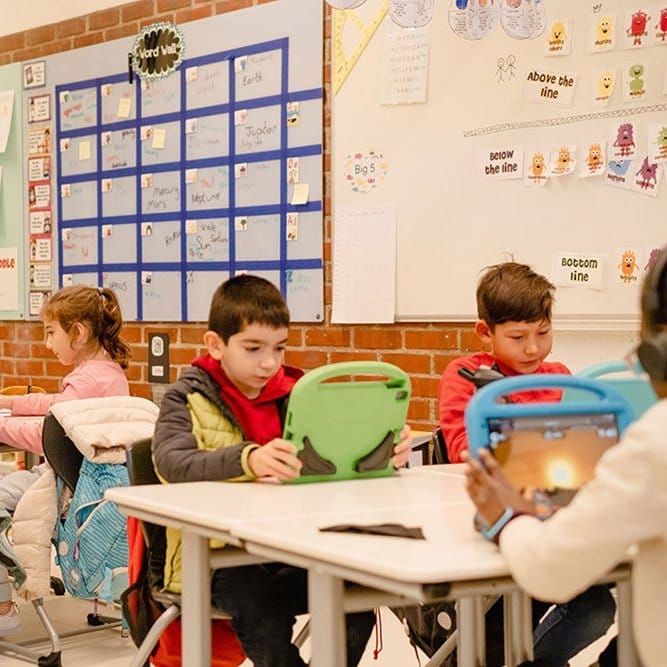
A new national recommendation says children in grades 1 to 7 should largely not use AI in schoolwork from this autumn. The government frames it as putting basic skills first, not as blaming AI for falling results.
Norway's government has issued a new national recommendation that pupils in primary school should, for the most part, not use artificial intelligence in their schoolwork. Announced on June 19, 2026 by the Office of the Prime Minister and the Ministry of Education, the guidance asks the Norwegian Directorate for Education (Utdanningsdirektoratet) to publish age-adapted recommendations in time for the start of the autumn term.
Under the recommendation, pupils in grades 1 to 7 should largely not be given access to AI tools. In lower secondary school, grades 8 to 10, AI can be introduced gradually and cautiously, but only after teachers have acquired enough competence to guide its use. In upper secondary, students are expected to learn to use AI appropriately to prepare for further study and work. Pupils who need AI-based tools for specific reasons, such as special-needs support or language learning, will still have access.
The measure is a national recommendation rather than a statutory ban, and it carries explicit exceptions.
Prime Minister Jonas Gahr Støre said the priority in school is that children learn to read, write and do arithmetic, and that while the government has high ambitions for AI, research indicates uncritical use of generative AI raises the risk of pupils skipping important steps in learning. Education Minister Kari Nessa Nordtun added that the youngest pupils lack the knowledge, critical reflection and self-regulation needed to use AI well, and said Norway should not repeat the mistake of introducing digital devices to young children without enough caution.
Why it matters
This is one of the clearer examples of a national government applying the brakes on classroom AI for young children, and the framing matters. The government is not claiming that AI caused a decline in results. It points to several rounds of international assessments, the Programme for International Student Assessment (PISA) and the Progress in International Reading Literacy Study (PIRLS), showing a sustained fall in Norwegian pupils' basic skills, with one in four pupils reading below the level the OECD considers a minimum for further schooling and work.
That slide predates the current wave of generative AI. What the government is arguing is sequencing: that children need foundational literacy and numeracy, and the judgment to evaluate a machine's answer, before AI belongs in their daily schoolwork. The reference point ministers keep returning to is the earlier rush to put screens and digital devices in front of the youngest pupils, an approach several Nordic systems have since reconsidered.
For the wider AI debate, the signal is that the "AI in every classroom" default is not universal. A technology-friendly government with stated ambitions for AI has decided the youngest learners are the wrong place to start.
What to watch
The detail now sits with the Directorate for Education, which has to turn the political recommendation into concrete, age-adapted guidance before the autumn term and define what competence teachers need before they can use AI in class. The government says the directorate will keep reviewing both the recommendations and the training on offer.
Get the ICD Newsletter
Subscribe for source-forward cyber news, OSINT notes, breach updates, and analysis. Have evidence or a lead? Send it to ICD.