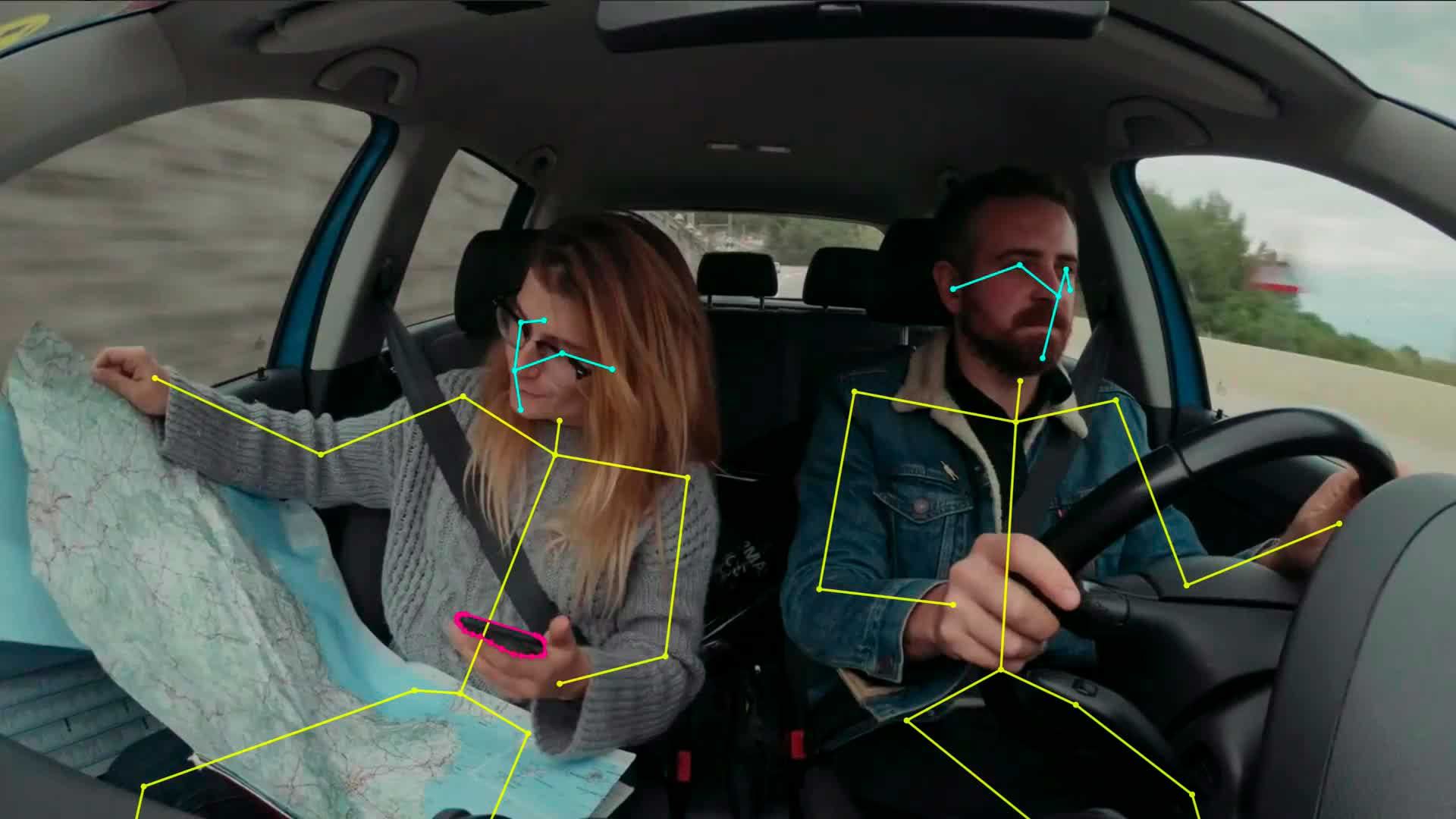
From July 7, 2026, all newly registered cars, vans, trucks and buses in the European Union must carry an Advanced Driver Distraction Warning system that tracks where the driver is looking and warns them when attention drifts off the road.
The requirement comes from Regulation (EU) 2019/2144, the EU's General Safety Regulation, which mandates Advanced Driver Distraction Warning (ADDW) systems for vehicle categories M and N. The rollout was phased. New vehicle types have had to include ADDW since July 7, 2024. As of today, the obligation extends to every new vehicle registered in the bloc. Vehicles already on the road are not affected.
How the system works
The technical rules sit in Commission Delegated Regulation (EU) 2023/2590. The system must monitor the direction of the driver's gaze whenever it is operating, and it activates automatically at speeds above 20 km/h.
The thresholds are specific. At speeds between 20 and 50 km/h, the system must warn the driver if their gaze stays fixed in a defined "distracted" zone, such as the lap or center console, for more than 6 seconds. Above 50 km/h, the limit drops to 3.5 seconds. Warnings must be visual plus acoustic and/or haptic, and they may escalate until the driver looks back at the road. The system must work in both daytime and nighttime conditions.
The regulation is written to be technology-neutral, but in practice compliance generally means camera-based tracking of head and eye movement. Systems that infer attention only from vehicle behavior, such as steering or lane keeping, are generally considered insufficient to detect visual distraction reliably.
ADDW is separate from the Driver Drowsiness and Attention Warning (DDAW) requirement, which the same regulation phased in earlier and which targets fatigue rather than distraction.
Why the EU did this
The European Commission estimates that between 10 and 30 percent of crashes in Europe involve road user distraction, and notes those figures are likely undercounts given how hard it is to establish contributing factors after a crash. The US National Highway Traffic Safety Administration has published similar estimates for American roads. The mandate is part of the EU's broader Vision Zero road safety agenda.
The privacy design
For a technology that points a camera at the driver's face, the regulation builds in notable constraints. ADDW systems must function without using biometric information, including facial recognition, of any vehicle occupant. They must operate as closed-loop systems, recording and retaining only the data necessary for the system to function, with processing kept on the vehicle.
That makes the mandate one of the larger real-world experiments in privacy-constrained monitoring. Eye-tracking vendor Smart Eye estimates the requirement covers roughly 15 million new vehicles per year, instantly creating a regulation-driven market for driver monitoring suppliers.
Get the ICD Newsletter
Subscribe for source-forward cyber news, OSINT notes, breach updates, and analysis. Have evidence or a lead? Send it to ICD.