Discord has quietly added a new name to its age verification stack. According to the company's support documentation, Discord is testing ID scan and selfie age checks with Incode between June and July 2026, alongside other new options including Google Wallet passport passes and credit card checks. Singapore-based k-ID remains Discord's primary age assurance partner, and the Incode trial may not reach all users.
Discord's pitch is privacy by architecture. The company says Incode's selfie method estimates age entirely on-device, so "your biometric data never leaves your phone." For ID scans, Discord says the document goes directly to Incode, only the date of birth is reviewed, no human ever sees the ID, and the data is permanently deleted once age is confirmed. Discord says it receives only the user's age, and the ID is never linked to the Discord account.
Users are not taking those claims at face value, and the reasons are specific rather than reflexive.
Start with the vendor's record. Incode handles ID verification for TikTok, and the Electronic Frontier Foundation has criticized that implementation because Incode does not automatically delete user data once verification completes. TikTok says it initiates a deletion process afterward, but the EFF called the arrangement a "disappointing failure to meet the industry standard." Incode's own privacy policy allows the company to retain biometric data until the original purpose is fulfilled or three years after a user's last interaction, whichever comes first.
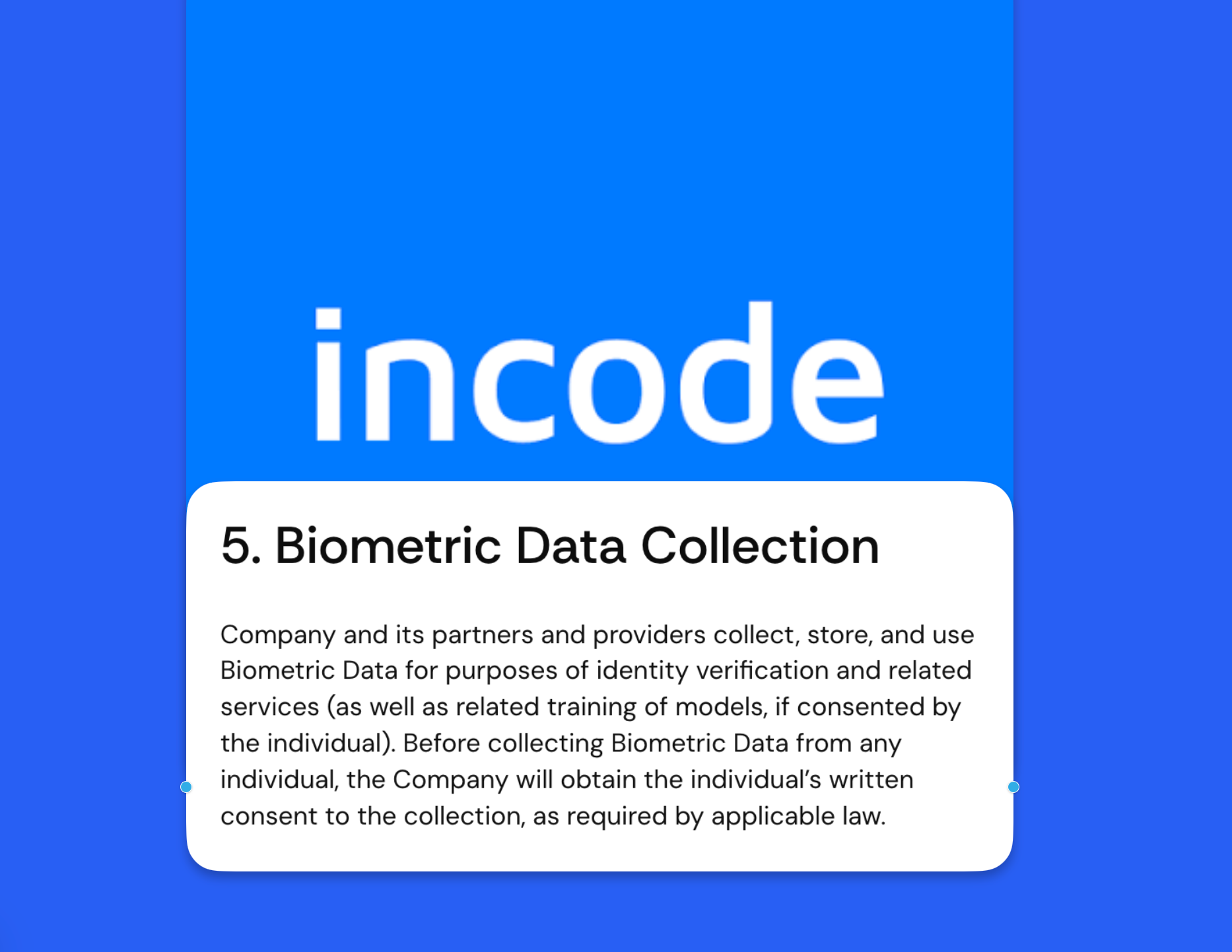
Then there is the fine print. Incode's biometric data policy states that the company and its partners collect, store, and use biometric data for identity verification and related services, and for model training where the individual has consented. The policy requires written consent before collection. That consent clause matters in practice, because users moving quickly through a verification prompt may agree to more than they realize.

Finally, there is the trust deficit Discord built itself. An earlier deployment of biometric verification from the vendor Persona drew enough backlash that Discord reversed course, according to Biometric Update. Then, in October 2025, Discord disclosed that attackers had socially engineered a support agent at 5CA, its outsourced customer support firm, gaining access to Discord's support systems and exposing government ID photos belonging to roughly 70,000 users, including people who had submitted IDs for age verification appeals. Discord subsequently delayed its broader global age assurance rollout to the second half of 2026.
Get the ICD Newsletter
Subscribe for source-forward cyber news, OSINT notes, breach updates, and analysis. Have evidence or a lead? Send it to ICD.